



Continuum®/Main Case Study/Process/Outcomes
Designing a care-centered platform to sustain trust, clarity, and emotional support throughout the surrogacy journey.
Jan 27, 2025
- COURSE
- MGT 120: Managing and Using Information Technology
- ROLE
- Designer and PM
- SERVICE
- UX Research, Product Design, Systems Thinking, Sensitive Domains
How Might We Center Surrogates in a System That Often Treats Them as a Vessel?
This project began with a prompt: pick a business problem in the world and reimagine it. After long discussions, my team landed on something complex, emotional, and often hidden, California's surrogacy process. Through months of interviews, journey mapping, and stakeholder analysis, we uncovered one striking truth: once pregnancy is confirmed, surrogate health, especially emotional and legal wellbeing is often sidelined.
While our group focused on presenting systemic policy improvements, I took the research further. I independently designed a digital platform focused on health readiness, something that didn't yet exist in this space. The result is a collaborative care portal that centers continuous care visibility, proactive health flagging, and centralized communication between surrogates, clinics, and intended parents.
What Is Surrogacy?
Surrogacy is an arrangement where a person, known as the surrogate, carries a pregnancy for a couple or individual who will become the child's legal parent(s) after birth.
- Gestational Surrogacy (via IVF) is the most common form
- $22.4B global surrogacy industry
- 0 Federal Standards , 50 unique state laws
- 0.24% of all U.S. births (but growing at 24.6% annually)

Who Holds the Power in Surrogacy?
We interviewed surrogates, intended parents (IPs), and agency reps, mapping out the web of influence that surrounds a single surrogacy journey.
- Intended Parents (IPs): Those who will legally parent the child
- Surrogates: The gestational carriers
- Agencies: Often act as a "one-stop shop"
- Private Arrangements: IPs manage all steps independently
- Hospitals: Treat surrogate pregnancies like any other, missing key emotional and legal nuances
The Hidden Frictions in Surrogacy
Our interviews revealed four recurring issues disrupting the surrogacy experience. Each subproblem became a doorway into deeper emotional and systemic design gaps.
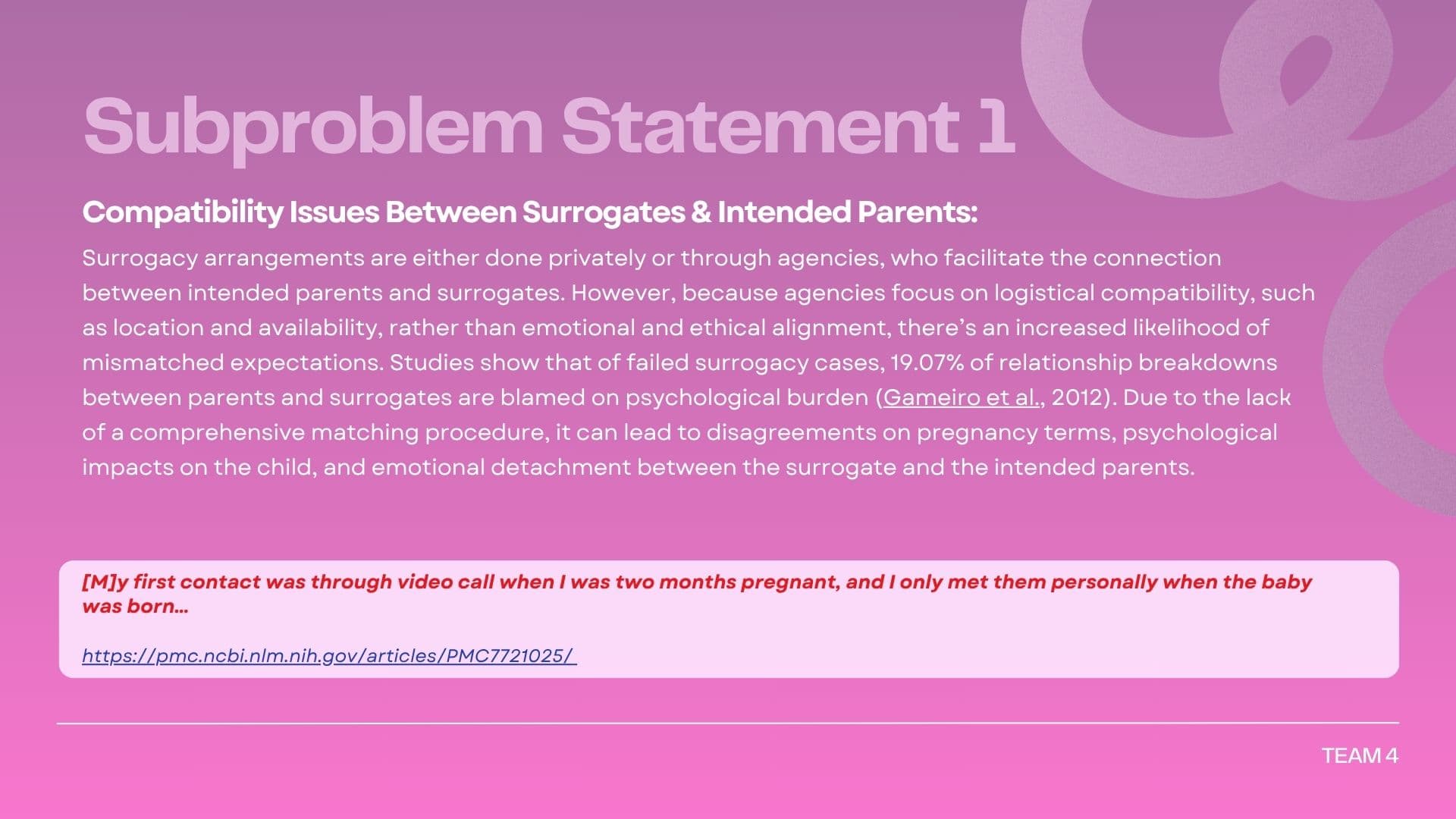
01. Matching Is Treated Like Logistics, Not Compatibility
Pain Points
- Psychological screenings are surface-level
- Agencies don't facilitate tough value-based conversations
- Matches happen quickly without clarity on topics like abortion or contact post-birth
Strategic Design Interventions
- A staged compatibility system pre-match, pre-contract, and mid-pregnancy
- Facilitated interviews on abortion, VBAC, selective reduction, post-birth contact
Addresses stories like Clementine's, who felt blindsided by a termination and Danielle's hesitation with donor gametes
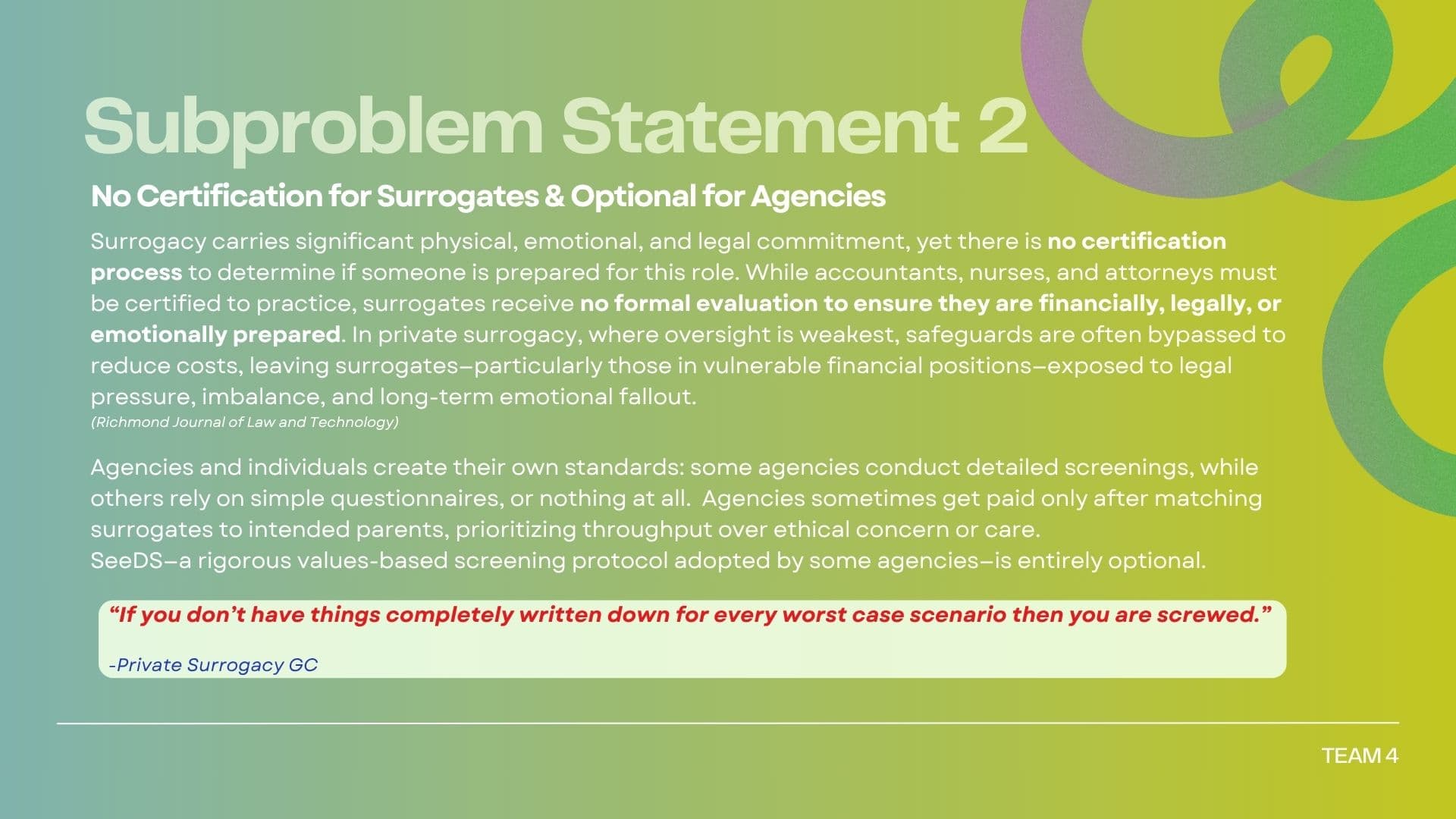
02. Emotional Readiness Is Assumed, Not Built
Pain Points
- First-time surrogates are emotionally unprepared
- Legal counsel is optional and often biased toward IPs
- Agencies disappear after contracts are signed
Strategic Design Interventions
- Mandatory orientation for surrogates and IPs, including third-party advocacy
- Informed consent sessions on sensitive topics like embryo use or delivery type
- Required independent legal counsel for surrogates to preserve autonomy
This addressed Danielle's need to pause and reflect during the process and Clementine's isolation during her hospital stay.
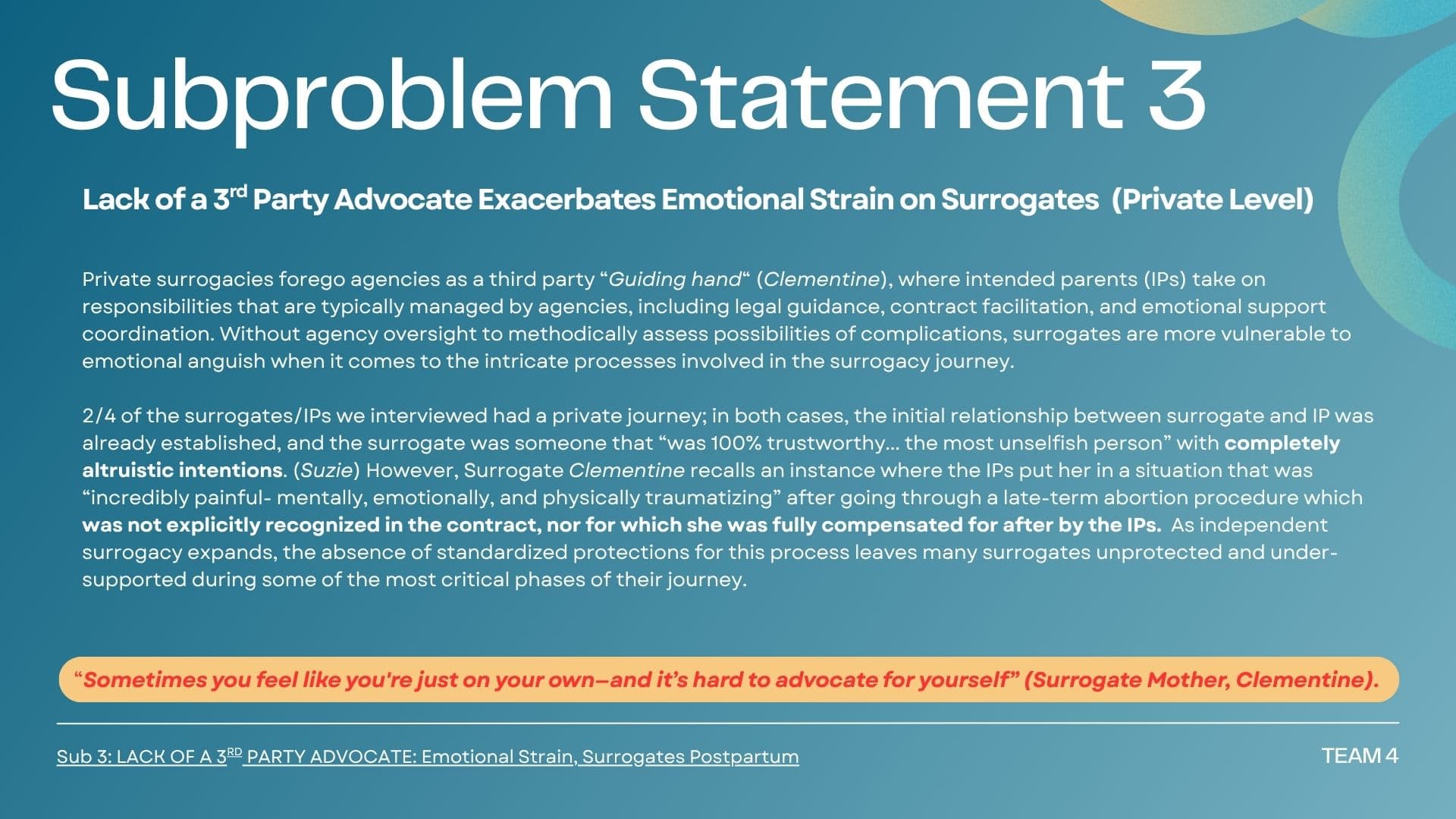
03. Private Surrogacy Lacks Protection Infrastructure
Pain Points
- No third-party advocate in private arrangements
- Mismatched expectations between IPs and surrogates
- IPs hold power over contracts, decisions, and hospital presence
Strategic Design Interventions
- Social workers from nonprofit surrogacy orgs to mediate contract discussions
- Built-in grief counselors at hospitals to provide support after birth
These interventions respond to trauma stories like Clementine's after a D&E procedure and Francesca's belief that "no one wants to be the bad guy."
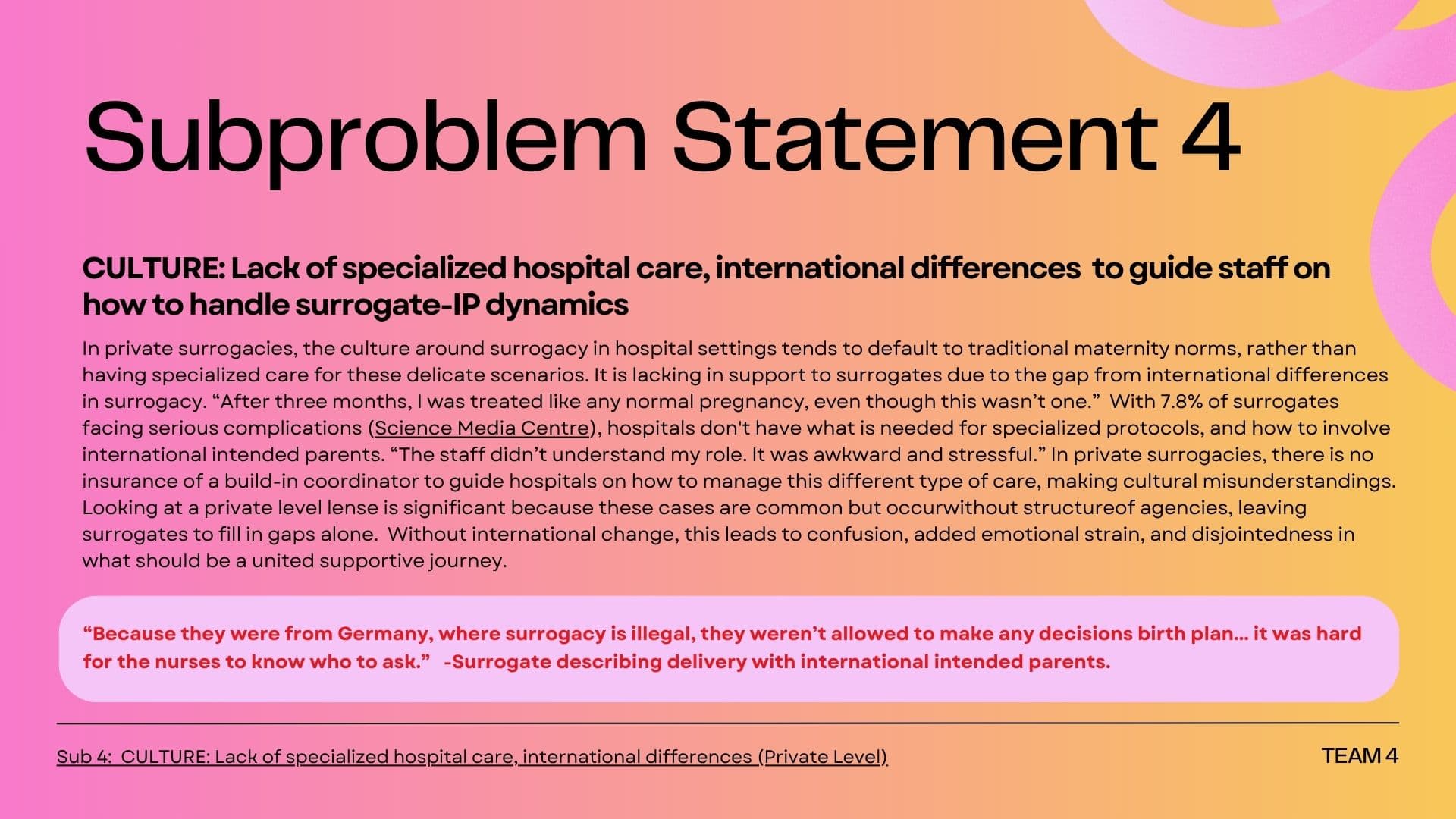
04. Hospital Systems Don't Understand Surrogacy
Pain Points
- Staff aren't trained to support surrogacy
- Surrogates are misrecognized or misunderstood
- IPs often miss out on critical updates or bonding moments
Strategic Design Interventions
- Surrogacy-specific hospital training embedded into SOPs
- Cross-departmental medical records for clarity on parent roles and discharge needs
Suzie's frustration over not being given a post-birth room, and Clementine's feeling of being "harassed" by uninformed hospital staff, highlighted these urgent gaps.
A Digital Care Platform Built on Emotional and Systemic Insight
From this research, I designed a digital platform concept that would center the surrogate's emotional and physical health, not as an afterthought, but as a foundation.
Key Capabilities:
- Care Visibility Timeline with health check-ins and psychosocial flags
- Proactive Conflict Prevention Tools for IP/surrogate alignment
- Centralized Communication between all stakeholders, including clinics and legal
Why This Work Matters
Surrogacy is deeply emotional, legally complex, and often handled like a contract, not a care journey. This project taught me how to listen between the lines of interviews, map power and pain, and design systems that treat people like people, not roles.
My independent research extended the project's original goal and led to a concept that blends care, coordination, and cultural sensitivity, shaping a more transparent, empowering surrogacy experience for all.